
Creative Love
What sits at the centre of our desire to explore ideas

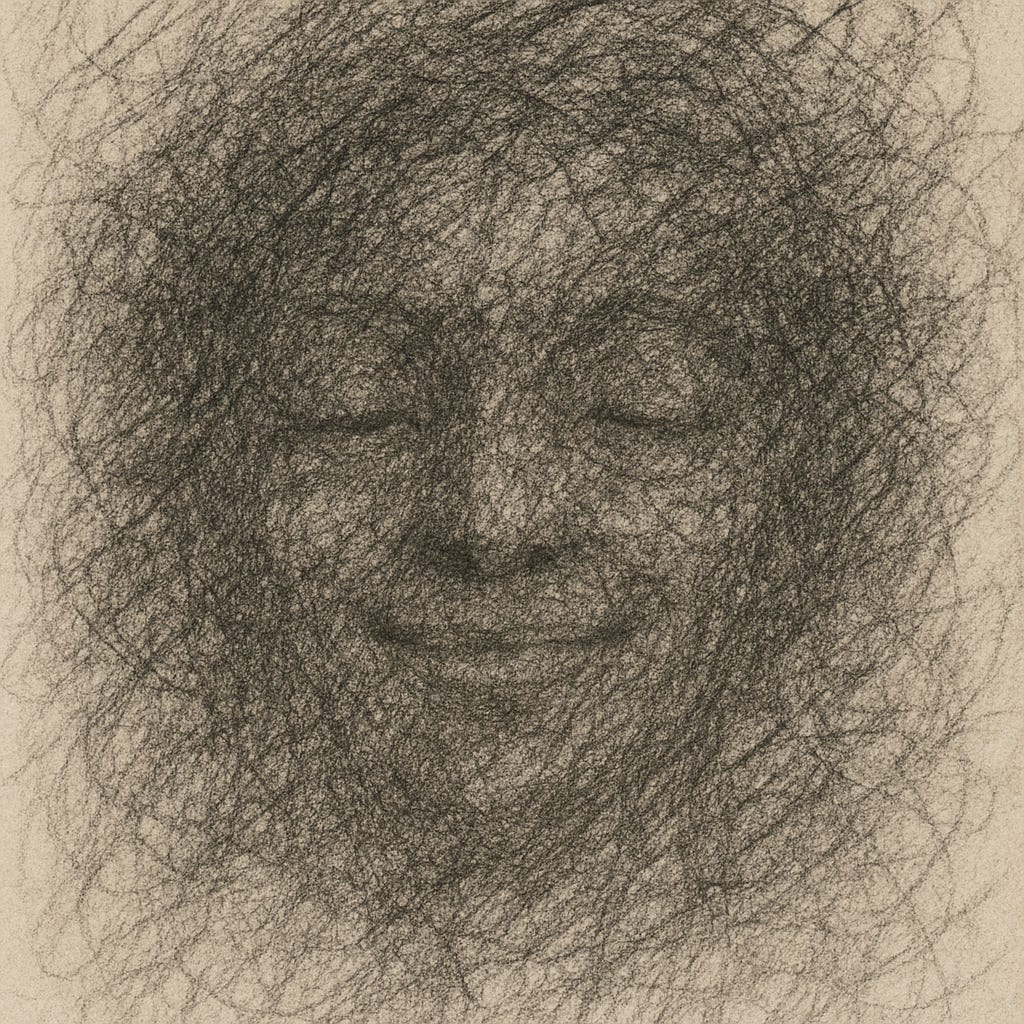
Creativity is of endless fascination to me—the strange compulsion to sit down and make something out of nothing, to conjure, to turn thoughts into realities.
I can see the practical virtues of creativity—the survival value of ingenuity—but I’ve always been slightly confused by how deeply it is tied to emotion. It is rarely simply practical. It is visceral and urgent. It seems tethered to our emotional landscape somehow.
The motivations behind creativity can vary wildly, even from moment to moment. Fear, love, rejection, ambition, and so on—a veritable pick’n’mix from across the boundless bounty of human experience.
But the success of any creative process is rooted in honesty and in love. Not necessarily towards the subject, but between the artist, their medium, and their creation.
A love born from a lifetime of learning the language, of playing in that world.
It is a love rooted in intimacy with one’s chosen medium. A love born from a lifetime of learning the language, of playing in that world. A world where feelings can be carried faithfully, and where understanding is natural—allowing for real, deep self-expression.
The artist loves their chosen medium, feels safe in it, and chooses its company over all else. It is the artist’s truest and safest space—a space in which they are fluent and at ease, without barriers to honesty or authenticity, without risk of misinterpretation or threat of derision. It is a place where they are never punished for speaking truth, but praised for taking risks, for being disruptive, for asking hard questions. A place where there are no dangerous mysteries, only delights to explore; no enemies, only friends to be made; where they are free, seen, and heard.
That is why they were drawn to it. Because there exists a rich, nurturing love that the artist feels within the creative process, within their medium, perfectly encapsulated by this paragraph from Mervyn Peake’s absurd and exquisite Titus Groan. Peake begins by comparing it to romantic love, before moving into the deeper heart of it:
“There is a love that equals in its power the love of man for woman and reaches inwards as deeply. It is the love of a man or a woman for their world. For the world of their centre where their lives burn genuinely and with a free flame.
The love of the diver for his world of wavering light. His world of pearls and tendrils and his breath at his breast. Born as a plunger into the deeps, he is at one with every swarm of lime-green fish, with every coloured sponge. As he holds himself to the ocean's faery floor, one hand clasped to a bedded whale's rib, he is complete and infinite. Pulse, power and universe sway in his body. He is in love.
The love of the painter standing alone and staring, staring at the great coloured surface he is making. Standing with him in the room the rearing canvas stares back with tentative shapes halted in their growth, moving in a new rhythm from floor to ceiling. The twisted tubes, the fresh paint squeezed and smeared across the dry on his palette. The dust beneath the easel. The paint has edged along the brushes' handles. The white light in a northern sky is silent. The window gapes as he inhales his world. His world: a rented room, and turpentine. He moves towards his half-born. He is in Love.
The rich soil crumbles through the yeoman's fingers. As the pearl diver murmurs, 'I am home' as he moves dimly in strange water-lights, and as the painter mutters, 'I am me' on his lone raft of floorboards, so the slow landsman on his acre'd marl […] says, ‘I am home.’”
Peake takes the creative process as one of his metaphors for this feeling of love, and it is from him that I borrow the image, focusing it wholly on creativity.
It powerfully describes the overwhelming sense of belonging and passion, the pleasant thrill of challenge, and the almost maniacal compulsion that burns within us in the throes of creativity.
For the diver, immersed in his “world of wavering light”, he is connected to the breath in his body, at one with his surroundings, as at home in that environment as the fish that surround him, deeply present in the moment, fuelled by it, energised. “Pulse, power and universe sway in his body. He is in love.”
For the artist, that love exists within the process, within that space. Even the unpleasant smell of turpentine indicates to him that he is in his element. “He moves towards his half-born. He is in Love.” Whatever that half-born piece is about, whatever motivated the artist, that love is there, both felt and given—it is a sanctuary for authenticity. And so he mutters, “I am me”.
…that love is there, both felt and given—it is a sanctuary for authenticity.
Their love is not an abstraction, but rooted in physical, sensory engagement, filling them with a sense of belonging, curiosity, and fluidity that comes from years of excited exploration and play.
Peake’s description of “the world of their centre where their lives burn genuinely and with a free flame” is deeply profound to me. He’s describing that sanctuary—a place where authenticity is sacred. The ability or freedom to be oneself, to express oneself honestly without fear of reproach, to explore one’s ideas without fear of shame or ignominy. That is the true ichor of creativity.
I strive for that—to burn genuinely and with a free flame. In the creative setting, I have moments of utter clarity, a deep sense of ease, where truth can spill out of me, unshaped by external influence, unencumbered by fear, into an almost fully formed piece. That sense of ease is the love that Peake describes—the feeling of being home, grounded in oneself, in one’s purpose, in one’s knowing.
It is those moments for me—of flow, honest expression, and connectedness—that are the pearl diver’s breath, the painter’s turpentine, and the rich soil in the yeoman's fingers.
the music feels like it’s looking back at me, half-born, and I move towards it.
The love that Peake speaks of bubbles within the excitement for what I’m creating. The sense of possibility, of potential, of honesty, of exploration, of freedom. That’s when the music feels like it’s “looking back at me, half-born”, and I move towards it.
The Universality of Creative Love
Though I took this idea and pointed it inwardly to my own creative practice, this love is not just felt by artists. This sense of home, of belonging, of liberation, is felt by anyone who does anything with passion. Gardeners, cooks, coders, carpenters, train-spotters, hobbyists of any kind. Anyone who sinks into their thing will feel it. And it only grows the more time we spend with that thing, the more we get to know it, the more we become fluent, the more it feels like home.
This love is both grounding and transcendent: it makes us feel the most like us, it connects us to our truest selves, and it dissolves us into something larger and builds bridges of connection.
This love is not transactional. It’s not about outcomes. It’s about the state of being in relation to one’s medium, to one’s passion. It’s about the arena it affords us for honest exploration, in a world that often doesn’t reward such things.
Unlike romantic or interpersonal love — which can be fraught, conditional, tangled — creative love is often steadier, a place of return. So to pursue creativity—echoing Peake’s vision of a life that “burn[s] genuinely and with a free flame”—is, at its heart, an act of love towards oneself.
So why is love so core to creativity? Because creativity needs nurturing and encouragement—love of this kind creates the safety and freedom to explore further. And what is creativity if not exploration?